

Window flashing is a thin, water-resistant material installed around a window to steer water away from the frame and out of your walls. When it works, you never think about it. When it fails, water slips into the wall cavity where you cannot see it, and the first interior clues (stained trim, paint peeling at the corners, a musty smell, a soft sill) often appear long after the damage started.
This guide walks through what flashing is, the main types, and the warning signs that yours is failing, so you can catch a small problem before it turns into a wall rebuild.
What Is Window Flashing?
Window flashing is a protective barrier fitted around a window to divert water away from the frame and the opening it sits in. It works behind your siding or cladding, layered with the home’s water-resistant barrier (house wrap), so that any water running down the wall is guided out and away rather than into the framing.
Flashing comes in a few materials, each with trade-offs:
- Metal (rigid): durable and long-lasting, but harder to fit and can corrode over time.
- Flexible (rubber or vinyl): easier to shape around openings, common on modern installs.
- Flashing tape (butyl or acrylic): self-adhesive membrane used to seal the flange; it must be a purpose-made flashing tape compatible with the house wrap, not standard packing or housewrap tape.
Types of Window Flashing
Different pieces protect different parts of the window:
| Type | Where it goes | What it does |
|---|---|---|
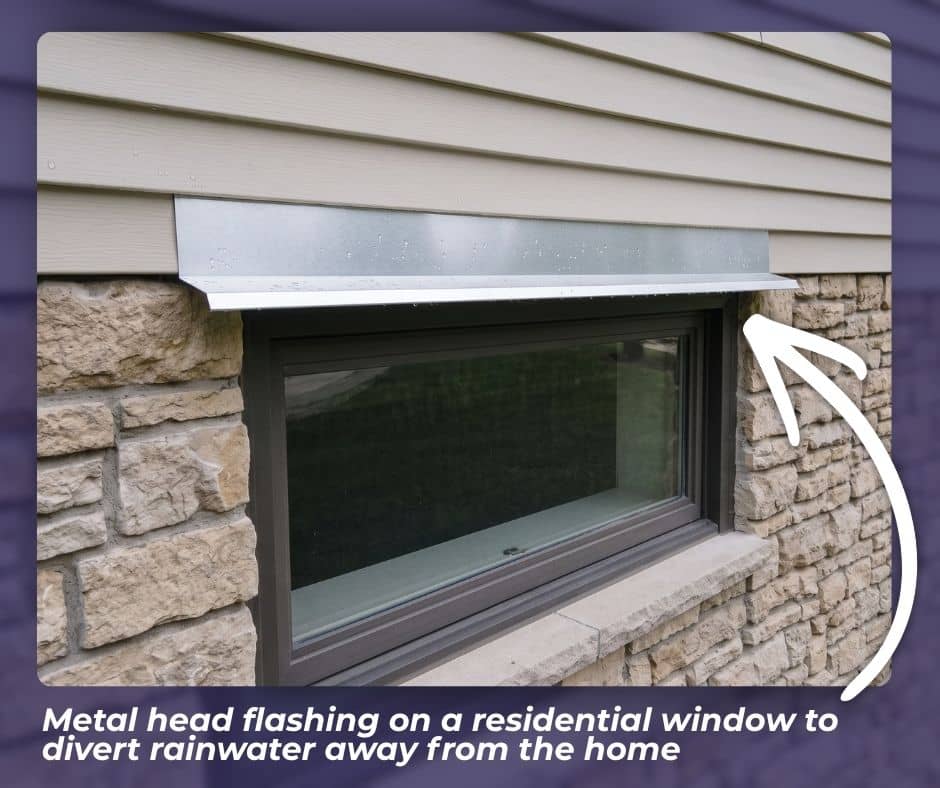
| Head flashing | Above the window | Directs water away from the top of the frame |
| Sill flashing / sill pan | Below the window | Stops water from pooling and draining it back out |
| Jamb flashing | Along both sides | Blocks water trying to enter at the sides |
Window Flashing vs. Caulk
These are not the same thing, and caulk is not a substitute. Caulk is a surface sealant that fills visible gaps and fails over time. Flashing is a layered water-management system built into the wall assembly. A home can be fully caulked and still leak badly if the flashing behind the siding was done wrong or has failed.
Is Window Flashing Really Necessary?
Yes. You can have the most energy-efficient window on the market, but without proper flashing, water will still find its way into the wall around it. Here is the part many homeowners miss: flashing is installed during construction, behind the siding, and it is usually not replaced during a standard window swap.
Unless there is a known problem, that step often gets skipped, which means an older home can have a brand-new window sitting on decades-old (or poorly installed) flashing.
Why Failing Flashing Is Such a Big Problem
Flashing failures are sneaky because they are invisible for a long time. The water damage happens inside the wall assembly, behind the cladding, where you cannot see it. By the time staining, soft drywall, or a musty smell shows up on the inside, the framing has often been wet for many months. That slow, hidden exposure is what turns a minor flashing issue into rotted framing, mold in the wall cavity, and structural repairs.
There is an energy cost too. Gaps that let water in also let air in, so failing flashing can mean drafts, uneven temperatures, and higher bills. Air sealing around openings is one of the things a blower door test can help pinpoint.
Signs Your Window Flashing Is Failing
Watch for these, and remember that the bold items tend to be the earliest visible warnings:
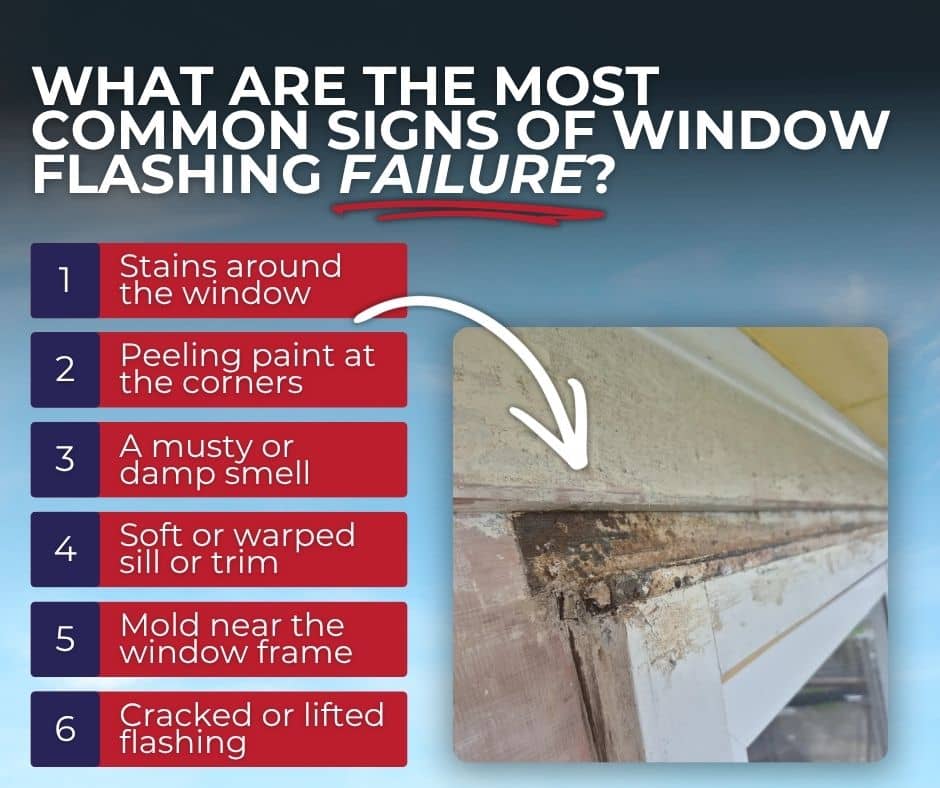
- Water stains or discoloration around or below the window
- Paint peeling or bubbling near the frame, especially at the lower corners
- A damp or musty smell around the window
- Mold or mildew on the frame, sill, or nearby wall
- Soft, spongy, or warped wood at the sill or trim
- Drafts or noticeable temperature changes near the window
- Visible cracks, gaps, lifted edges, or corrosion on any flashing you can see
- A white, powdery residue (efflorescence) on nearby masonry
Most of these appear only after water has been in the wall for a while, which is exactly why a trained set of eyes matters more than a quick glance.
What Causes Window Flashing to Fail?
The most common cause is improper installation: the wrong or incompatible tape, poor layering, or sealing the bottom flange shut so trapped water has nowhere to drain.
After that, it is age and weather: UV exposure, freeze-thaw cycling, and settling all break down seals over time. Failed caulk around the frame speeds things up by letting the first water in.
What a Home Inspection Catches
Because the worst flashing damage hides inside the wall, a professional home inspection [LINK: /home-inspection/] is the reliable way to catch it early. An inspector looks for the subtle exterior and interior clues, checks how the flashing integrates with the siding and trim, and uses moisture readings to find dampness before it becomes visible staining. That turns a guessing game into a documented findings list you can act on.
Left unaddressed, the moisture behind failing flashing is a leading path to a bigger cleanup. It is a common way mold takes hold and requires remediation, and where windows meet stucco or other exterior wall systems, flashing detailing is one of the most common trouble spots.
Window Flashing and FORTIFIED Homes
Sealing a home’s openings is a core part of the FORTIFIED standard from the Insurance Institute for Business & Home Safety (IBHS). At the FORTIFIED Silver level, windows, doors, and other openings are specifically addressed so wind-driven rain cannot get in, on top of the roof upgrades that come with FORTIFIED Roof.
If you want the full picture of how the program works, our overview of the FORTIFIED certification process and our answers to common questions about FORTIFIED roofs are good next reads.
Homes that earn a FORTIFIED designation may also qualify for insurance discounts in many states, so the same detailing that keeps water out of your walls can also lower what you pay to insure the home.
Related Questions to Explore
Is window flashing the same as caulk?
No. Caulk is a surface sealant that fills visible gaps and wears out. Flashing is a layered system built into the wall to manage water. A home can be fully caulked and still leak if the flashing failed.
Do replacement windows need new flashing?
Ideally, yes, but flashing is often left in place during a standard window swap. If the old flashing is failing, a new window alone will not stop a leak.
Can window flashing be replaced without removing the window?
Usually not fully. Reaching the flashing typically means removing trim or a section of siding around the opening, which is why it is a job for a professional.
What happens if a window has no flashing?
Water that runs down the wall has nothing directing it away from the opening, so it works into the framing and interior finishes, leading to rot, mold, and eventually structural damage.
How long does window flashing last?
It depends on the material and how well it was installed. Quality flashing can last decades, but poor installation or failed caulk can cause problems in just a few years.
When to Call a Professional
Reach out to a licensed inspector when you notice any of these:
- Stains, peeling paint, or a musty smell around a window
- Soft or warped wood at the sill or trim
- Mold or mildew near the frame
- Persistent drafts around a window
- Visible gaps, cracks, or corroded flashing
- Anything you cannot assess with confidence from the ground
Flashing is not a DIY guessing game. Catching a problem early, before water reaches the framing, is one of the smartest ways to protect your home and your budget.
Conclusion
Window flashing is a small component with an outsized job: keeping water out of your walls. Because its failures hide for so long, the signs are worth knowing and worth acting on early. If you are unsure about the condition of your flashing or interested in the FORTIFIED Home program, Knockout Inspections can help. Schedule an inspection and protect your home before the next heavy rain finds the gap.