
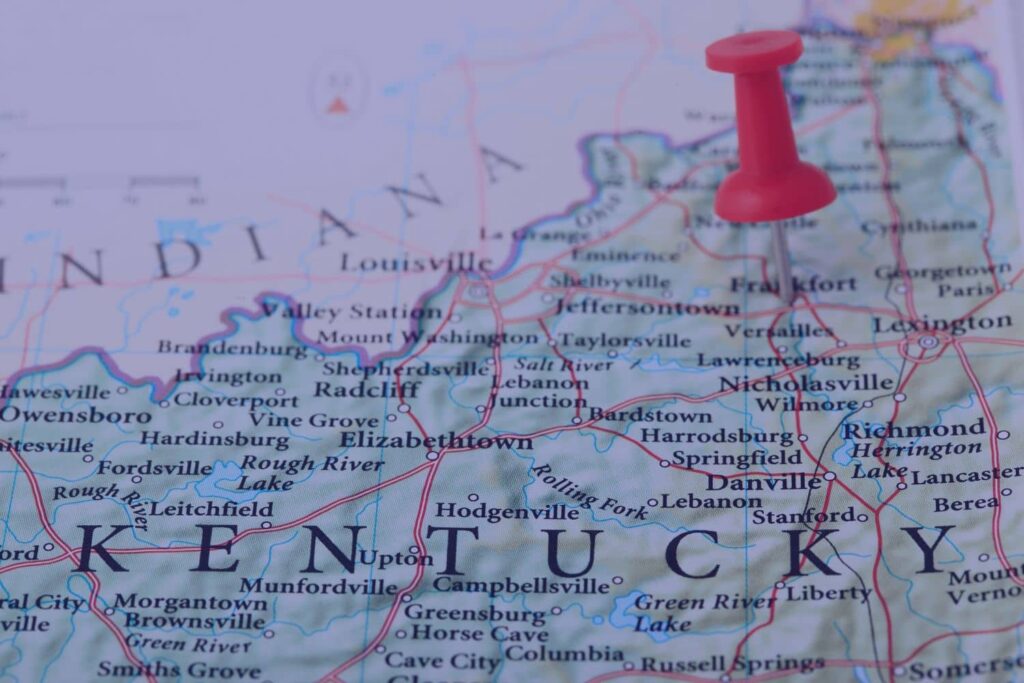
Kentucky’s most active severe weather runs from April through June, so as summer settles in, the spring storm season is largely behind us. Now is the smart window to walk your property and check for damage before small problems turn into expensive ones. Start with safety, then look over your roof, attic, gutters, siding, windows, and foundation, and photograph anything that looks off.
A lot of wind and hail damage does not show up from the ground, so when something looks questionable, bring in a professional. Better still, the repairs you make now can become long-term protection through FORTIFIED upgrades and the Strengthen Kentucky Homes grant.
Kentucky Storm Season: What’s Passed and What’s Coming?
Kentucky has one of the more varied severe-weather profiles in the country, and spring is the peak: April, May, and June are the three most active months for severe thunderstorms across the state. Here are the main threats a Kentucky home faces through the year:
| Storm threat | When it’s most active | What it tends to damage |
|---|---|---|
| Tornadoes | Spring peak (Apr–Jun), some fall | Roof, siding, windows, whole structure |
| Straight-line winds / derechos | Spring into summer | Shingles, gutters, trees, power lines |
| Large hail | Spring and summer | Shingles, flashing, vents, siding |
| Heavy rain/flash flooding | Spring into late summer | Foundation, basement, crawl space |
| Ice and winter wind | Winter | Roof, gutters, tree limbs |
This past season proved the point. In late April, the National Weather Service documented tornadoes, straight-line wind damage, and flash flooding across central Kentucky in a single storm system. Events like that can loosen shingles, dent flashing, and drive water into places you will not notice for weeks.
Here is the part many homeowners miss: the season is not fully over. Kentucky storm activity tends to run into late summer, with a secondary bump in the fall and winter wind and ice storms after that. That makes this stretch the ideal time to fix what spring left behind and get ahead of what is coming.
Why Check Your Home After Storm Season (Even If Nothing Looks Wrong)
The biggest mistake after a storm is assuming that no water inside means no damage outside. A lot of storm damage is invisible from the ground:
- A lifted shingle can reseal itself and still leave a broken seal underneath.
- A hairline crack in flashing may not leak until the next heavy rain.
- Wind can loosen the fasteners holding your gutters and siding without anything falling off.
Left alone, those small issues compound. A slow roof leak feeds attic moisture, and attic moisture feeds mold and rotted decking. A clogged or bent gutter sends water toward your foundation instead of away from it. Catching problems in the weeks after the season, rather than months later, is one of the most valuable maintenance habits a Kentucky homeowner can build.
How to Check Your Home After Kentucky Storm Season
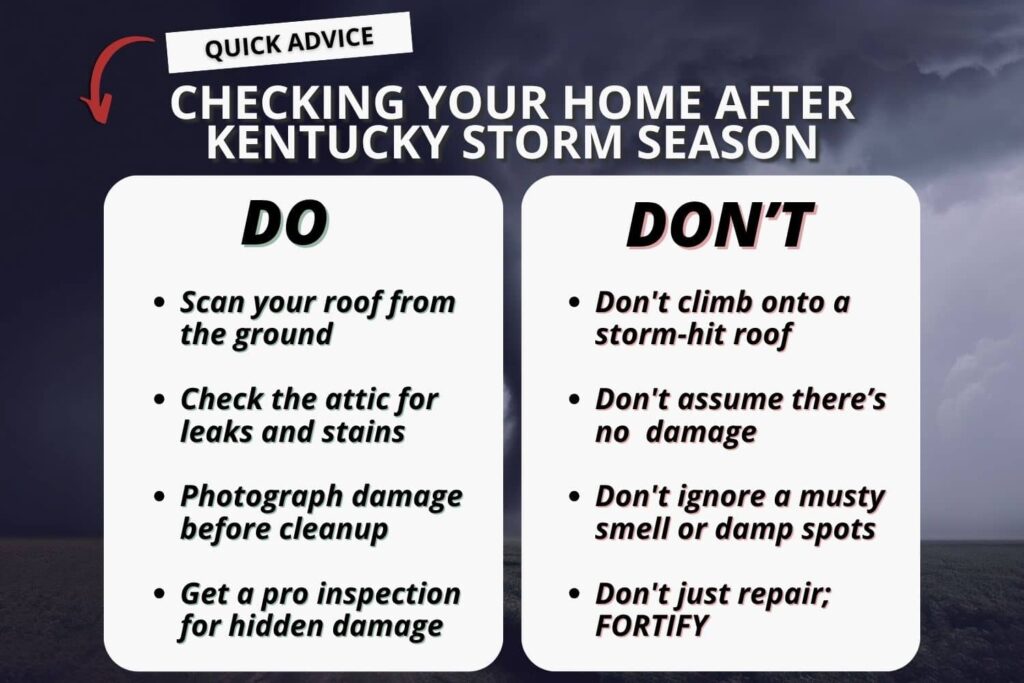
Here is a space-by-space walkthrough you can do in about 30 minutes. Keep both feet on the ground: never climb onto a roof that may be structurally compromised.
Start With Safety First
Before you inspect anything, clear these hazards:
- Stay away from downed or sagging power lines, and report them to your utility company.
- Watch for broken glass and unstable trees or limbs.
- If you smell gas, leave the home first, then call your utility from a safe distance.
Work Through Your Home, Area by Area
Use the checklist below as you walk the property. The bold items are the ones homeowners miss most often.
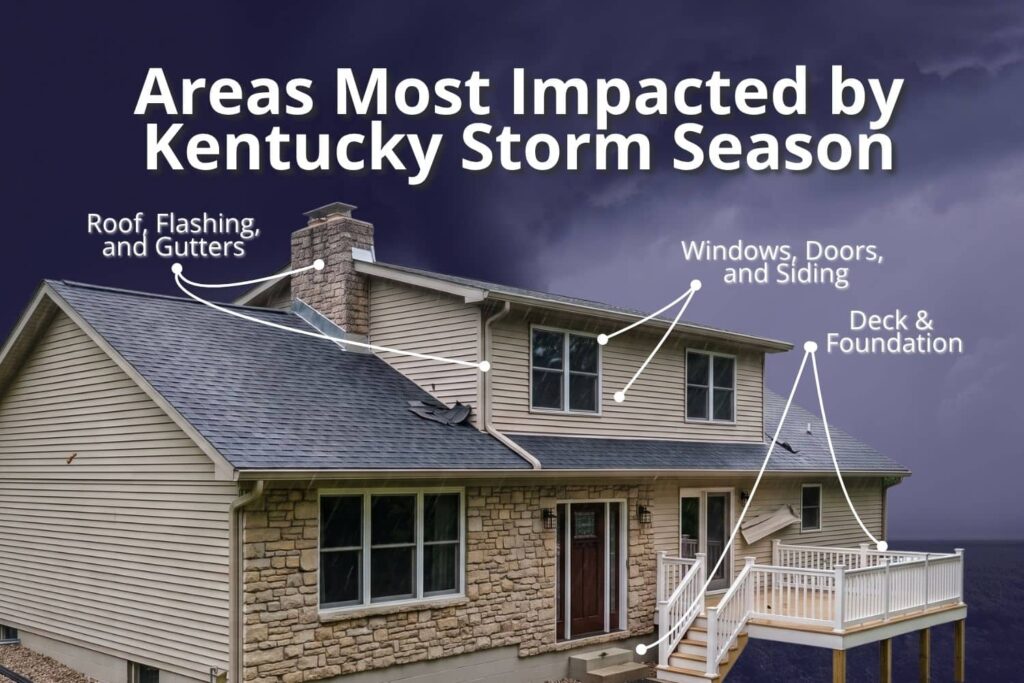
Roof (from the ground):
- Missing, cracked, curled, or lifted shingles
- Dents on metal flashing, vents, and roof accessories
- Piles of shingle granules in gutters or on the ground, a common sign of hail damage
Want to go deeper on wind and roofs? See our guide on how to protect your roof from wind damage.
Attic and ceilings:
- Damp spots, staining, or daylight showing through the roof deck and rafters
- Wet or matted insulation
- Water spots, bubbling paint, or a musty smell inside, since a leak can hide for weeks
Gutters and drainage:
- Gutters still fastened, not bent or pulled loose
- Downspouts carrying water several feet away from the house
Siding, windows, and doors:
- Cracks, holes, or loosened siding panels
- Cracked glass, broken seals, or new gaps around frames
Foundation and basement:
- New cracks in the foundation
- Pooling water near the base of the house
- Moisture, puddles, or a musty odor in the basement or crawl space
Document Everything
Photograph every issue from multiple angles and note the date before you clean anything up. If you file an insurance claim, that record supports it, and Kentucky carriers are required to acknowledge and investigate claims within set timeframes.
Here is the quick version to keep handy:
| Where to look | What you’re looking for |
|---|---|
| Roof | Missing or curled shingles, dented flashing, granule piles |
| Attic and ceilings | Damp rafters, wet insulation, water stains, musty smell |
| Gutters | Loose or bent gutters, downspouts draining too close to the house |
| Siding and windows | Cracks, loosened panels, broken seals, new gaps |
| Foundation and basement | New cracks, pooling water, moisture or musty odor |
From Repairs to Resilience: FORTIFIED Kentucky Homes Grant
Repairing storm damage is a chance to do more than restore what you had. It is a chance to build back stronger. FORTIFIED is a construction standard from the Insurance Institute for Business & Home Safety (IBHS) that goes beyond code to reduce damage from high winds, hail, and tornadoes, starting with the most vulnerable part of any home: the roof.
Kentucky makes this affordable. Here is what the Strengthen Kentucky Homes grant offers eligible homeowners:
- Up to $10,000 toward a FORTIFIED roof upgrade, paid directly to the contractor
- Required insurance discounts, since Kentucky law requires insurers to offer them on homes that earn a FORTIFIED designation
- Lasting protection against the wind and hail that hit Kentucky every year
A certified FORTIFIED Evaluator must be involved from the start for a home to qualify. Knockout Inspections is a listed, approved evaluator in the Kentucky FORTIFIED Home program.
If you are weighing whether a FORTIFIED upgrade is right for your roof repair, our answers to common questions about FORTIFIED roofs and our overview of the FORTIFIED certification process are good next reads.
Related Questions to Explore
How soon after a storm should I check my home?
As soon as conditions are safe. Aim to complete a ground-level check within a few days so any water intrusion is caught before it spreads into decking, insulation, or drywall.
Can I inspect my roof myself after a storm?
You can do a visual check from the ground with binoculars or from a window, and that is the safe limit. Do not climb onto a storm-hit roof: surfaces may be slick or structurally weakened, and much of the damage is not visible from the surface anyway. That is where a professional inspection earns its cost.
Does homeowners insurance cover storm damage in Kentucky?
Most policies cover sudden storm damage from wind and hail, though coverage and deductibles vary, and flooding usually needs separate coverage. Documenting damage with dated photos and getting a professional assessment strengthens your claim.
When is storm season in Kentucky?
Severe thunderstorm and tornado activity peaks in April, May, and June, with meaningful activity running into late summer and a secondary rise in the fall, plus winter wind and ice storms.
How much does a FORTIFIED roof cost in Kentucky?
A full FORTIFIED roof replacement typically runs in the low-to-mid five figures depending on size and complexity, but the Strengthen Kentucky Homes grant covers up to $10,000, and many homeowners with smaller roofs see limited out-of-pocket cost after the grant.
When to Call a Professional
Bring in a licensed inspector or contractor when you notice any of these:
- Interior water stains or a musty smell
- Missing shingles or piles of granules
- Dented or displaced flashing
- Loose or sagging gutters and siding
- New foundation cracks or basement moisture
- Anything you cannot assess safely from the ground
A professional home inspection finds the hidden damage a ground-level look misses and gives you a clear, documented report to act on, whether that means a repair, an insurance claim, or a FORTIFIED upgrade.
Because water intrusion is a leading cause of interior damage, addressing it quickly can prevent far costlier problems. Post-storm moisture is exactly how mold takes hold, how basements develop a lingering musty smell, and how saturated soil can put stress on a foundation.
Conclusion
Kentucky’s spring storms may be behind us, but the state’s weather never really stops, so the work you do now protects your home through the rest of the year. Walk your property, document what you find, and get a professional set of eyes on anything questionable.
If storm season left you facing a roof repair, talk to us about turning it into a FORTIFIED upgrade backed by the Strengthen Kentucky Homes grant. Schedule an inspection with Knockout Inspections and head into the next season with confidence.