
Tornado season runs from spring into early summer across most of the country, and it moves north as the year goes on. In the Deep South, there is a second peak in November. For homeowners in Alabama, Mississippi, and Louisiana, that means two high-risk windows each year, and the fall window is opening now. This guide covers when tornado season hits, why the South gets a second round, how to tell a watch from a warning, and how to get your home and family ready.
At Knockout Inspections, we work with Gulf Coast homeowners on storm readiness every day.
When Is Tornado Season?
There is no single tornado season. Tornado season is the time of year when the right weather ingredients come together in your area, so it shifts north and south with the jet stream. University of Wisconsin weather researchers explain that those ingredients are warm, moist air near the ground, drier air above it, a change in wind speed and direction with height, and something like a front to lift the air.
Here is how the timing breaks down by region:
| Region | Main peak | Second peak |
| Southeast and Deep South | March and April | November |
| Upper Midwest and Northeast | July | Not a major second peak |
| Kentucky | April through June | Some fall activity |
Tornadoes can happen in nearly every state and in every month. Unlike hurricane season, there is no official date range and no forecast for the whole season. That is why a plan matters more than a calendar.
For Kentucky details, see our guide on how and why to check your home after Kentucky storm season.
Why the South Has a Second Tornado Season
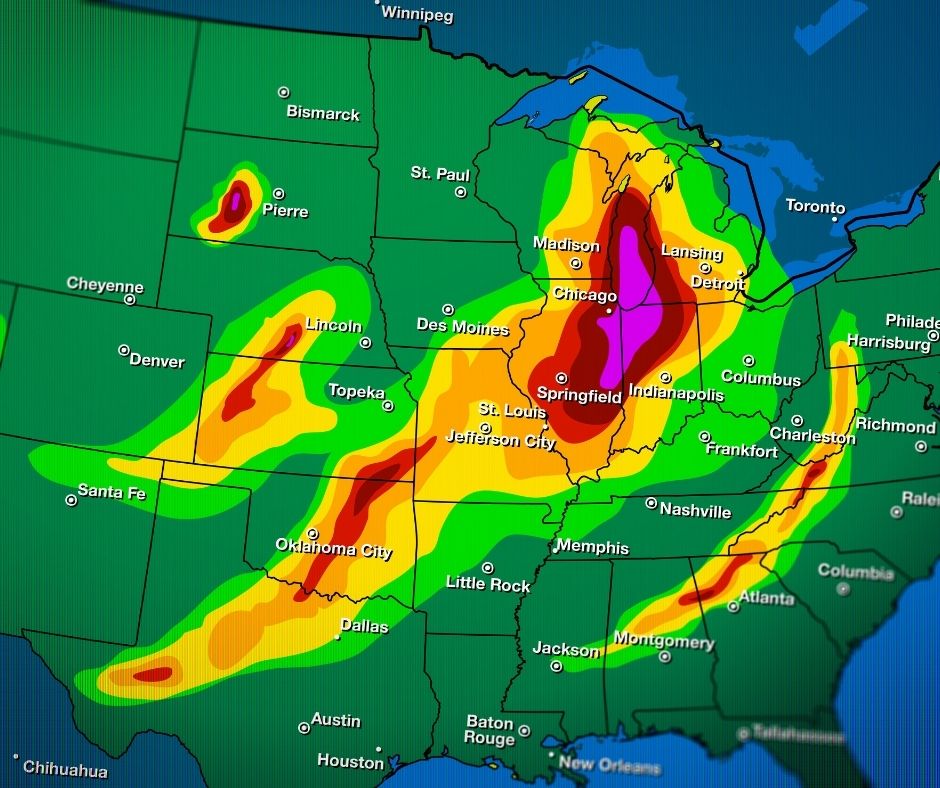
The South gets a second tornado season because fall weather sets up the same ingredients as spring. Warm, humid air from the Gulf of Mexico meets stronger cold fronts and jet stream winds, and that clash can spark severe storms. Weather experts call fall the “second season,” and November is the peak month in the Deep South.
Three things make fall tornadoes tricky:
- They often strike after dark. Fall brings fewer daylight hours, and November has a clear nighttime peak for tornadoes. Many people are asleep or not watching the sky.
- People do not expect them. Most homeowners think of tornadoes as a spring problem, so fall plans slip.
- Local numbers add up. According to the National Weather Service in New Orleans, November averages about 6 tornadoes in Alabama and 5 each in Louisiana and Mississippi.
Mississippi treats this window seriously enough to name November Tornado Awareness Month. If you live along the Gulf Coast, make your plan before the first November storm, not after.
Tornado Watch vs. Tornado Warning
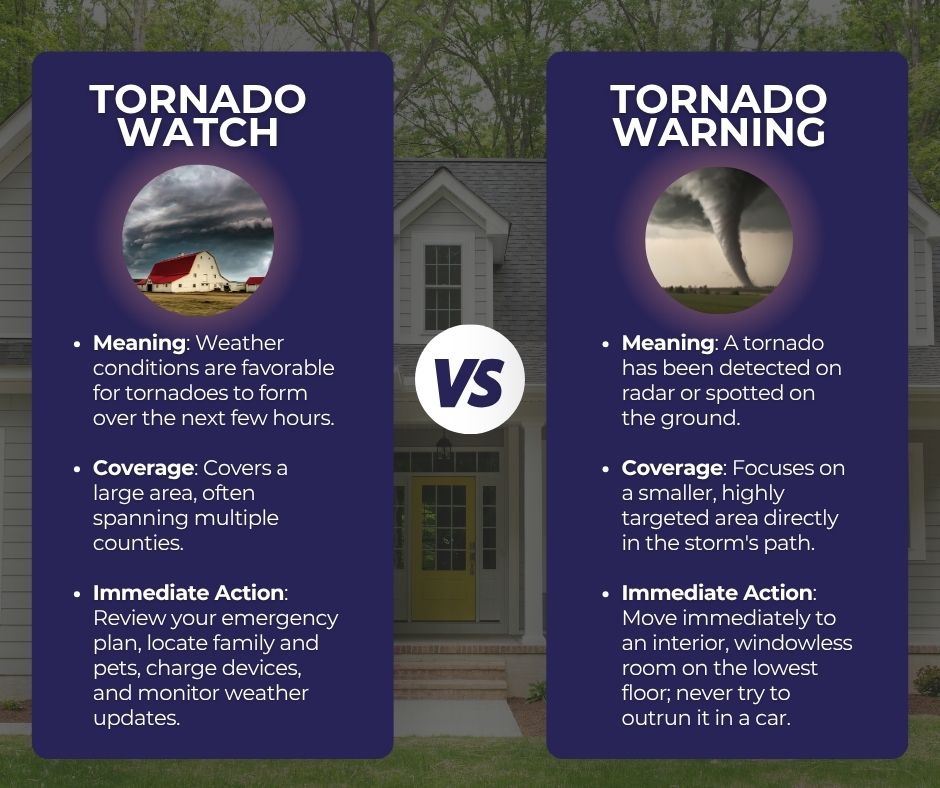
A tornado watch means tornadoes are possible. A tornado warning means one has been seen or shown on radar, and you need to act right now. The National Weather Service issues both, and the difference could save your life. Here is how they compare:
| Tornado watch | Tornado warning | |
| What it means | Conditions are favorable for tornadoes in the next few hours | A tornado has been sighted or shown on weather radar |
| Area covered | Large, often several counties or more | Smaller, targeted area |
| What you do | Review your plan, find family and pets, and keep monitoring | Take shelter immediately |
During a watch, stay alert and check your shelter route. During a warning, go to your shelter and stay there. Do not try to outrun a tornado in a car. The National Weather Service tornado safety page has more detail on each step.
One tip for your phone: most newer smartphones receive wireless emergency alerts for tornado warnings, but not for tornado watches. Keep your phone charged and turned on at night. A NOAA Weather Radio is a good backup, because it can wake you for any watch or warning.
How to Prepare Before Tornado Season
The best tornado prep is a plan you have practiced. Know where you will shelter, how you will get warnings, and what you will bring. Use this checklist:
- Pick your shelter spot. The best choice is a safe room built to FEMA criteria or a storm shelter built to ICC 500 standards. The next best choice is a small, interior, windowless room on the lowest level of a sturdy building, or a basement.
- Set up warnings. Use a NOAA Weather Radio, phone alerts, and local news. Do not count on just one source.
- Build a kit. Pack water, non-perishable food, medicine, flashlights, and phone chargers. Keep it where you will shelter.
- Practice. Run a quick drill with your family so everyone knows where to go. Include pets.
- Know the mobile home rule. Mobile homes do not protect you in a tornado, even when tied down. Plan to go to a sturdy building or shelter nearby before the storm arrives.
- Document your home. Take photos or a video of each room and your valuables. It makes an insurance claim easier later.
- Trim and secure. Cut back limbs that hang over your roof and put away loose items that can fly in high winds.
Home Checks That Reduce Tornado Damage
Damage usually starts at the roof and spreads through weak spots like garage doors, windows, and entry doors. No home is fully tornado-proof, but a few checks make a real difference:
- Roof: Look for missing, lifted, or curled shingles. If your roof is more than 10 years old or due for replacement, ask about upgrading to a FORTIFIED roof.
- Garage door: It is the biggest opening on most homes. An unbraced door is often the first thing to fail, so ask about a bracing kit or a wind-rated door.
- Windows and doors: Look for cracked glass, worn seals, and loose frames. Impact-rated glass and strong door hardware help.
- Trees: Remove dead limbs and trees that could fall on your home.
A safe room still gives you the best protection for people. For a deeper look at upgrades, costs, and what does not work, read our guide on how to create a tornado-resistant home.
What to Do During and After a Tornado
During a tornado warning, go to your shelter right away. Get to the lowest floor, move to an interior room with no windows, and cover your head and body with heavy blankets or a mattress. Flying debris causes most tornado injuries and deaths. Do not open windows. That myth does nothing to help and lets wind and debris in.
After the storm passes:
- Wait for the all-clear. Stay out of damaged buildings until local officials say it is safe.
- Watch your step. Broken glass, nails, and sharp debris are common.
- Stay away from power lines. Treat any downed or sagging line as live and report it to the utility.
- Use texts, not calls. Phone lines get crowded after a disaster.
- Photograph the damage before you clean up. Date the photos and keep them for your insurer.
- Check your roof from the ground. Never climb onto a storm-damaged roof. See our guide on how to check for roof damage after a big storm.
Related Questions to Explore
- What months are tornado season? It depends on where you live. The Southeast peaks in March and April, the upper Midwest and Northeast peak in July, and the Deep South has a second peak in November. Tornadoes can strike in any month, so check your home before your area’s peak.
- Is there a tornado season in the fall? Yes, in the South. November is the Deep South’s second peak, and many of those storms hit at night. Schedule an evaluation before November to have your roof and garage door checked.
- What time of day do tornadoes happen? More than half of U.S. tornadoes happen between 3 p.m. and 7 p.m., but they can strike at any hour. Fall storms in the South often peak at night, so set up your alerts and shelter spot ahead of time.
- Can a home be tornado-proof? No. A direct hit from a strong tornado can destroy even a well-built home. A FORTIFIED Home evaluation checks the parts that fail first, like the roof deck, garage door, and windows, and gives you a list of upgrades.
- What does a home inspection check for storm readiness? A home inspection covers the roof, flashing, attic, garage door, windows, and doors. Those are the spots where wind and water get in. Catching worn shingles or loose flashing before storm season costs far less than a claim.
- Where is the safest place in a house during a tornado? A safe room built to FEMA criteria or a storm shelter built to ICC 500 standards. Without one, go to a basement or an interior room with no windows on the lowest level, and cover your head. Mobile homes are not safe, even when tied down, so head to a sturdy building when a watch is issued.
When to Call a Professional
Call before the next storm, not after it. A certified inspector and FORTIFIED Evaluator can check how ready your home is and tell you which upgrades give you the most protection for your budget. Consider an evaluation if:
- Your roof is more than 10 years old or due for replacement
- You want a FORTIFIED designation or a state grant
- You are buying or selling and want to know a home’s storm weak spots
- You live on the Gulf Coast or anywhere with a tornado risk
Knockout Inspections is certified to perform FORTIFIED Home evaluations across Alabama, Florida, Louisiana, Mississippi, and Kentucky. A standard home inspection can also flag storm weak spots before they turn into expensive repairs. State programs can help pay for a stronger roof, including Strengthen Alabama Homes, Strengthen Mississippi Homes, and Louisiana Fortify Homes. Grant amounts and rules change, so confirm the current details before you plan.
Conclusion
Tornado season is not one date on the calendar. In the Deep South, you get a spring peak and a second peak in November.
- Know the difference between a watch and a warning, and have two ways to get alerts
- Pick your shelter spot now and practice getting there
- Check your roof, garage door, and openings before storms arrive
Ready to see how your home measures up? Schedule an evaluation with Knockout Inspections.